Saturday, January 16, 2021

CPT • BREAKING NEWS: Marty Sweeney to join County Council after winning County Dems' unit vote

Cuyahoga Politics Today

By R. T. Andrews

Martin Sweeney at Cuyahoga County Democratic Party District 3 Executive Committee Meeting on Zoom

Former Cleveland city council president Martin J. Sweeney was selected to fill the Cuyahoga County District 3 seat left vacant by the resignation last month of County Council president Dan Brady. The closely contested vote was conducted this morning over Zoom.

Sweeney won a second ballot victory over attorney Brendan Heil, 35-27. Ryan Ross came in third with one vote.

33 votes were required to win the nod. On the first ballot, Sweeney led Heil 32 to 26, with Ross getting five votes; there was one abstention.

In a telephone interview with The Real Deal Press earlier this week, Sweeney, also a former state representative, said that he greatly missed public service and that if elected, he would dedicate himself to constituent service.

It is widely anticipated that Heil, who is the Cleveland ward 15 leader, and also president of the county's young Democrats, will challenge Sweeney when an election is held to fill the unexpired term.

The Heil-Sweeney contest was seen by many as a harbinger of what may be a changing of the guard in Cleveland's political climate, with so many key positions — the 11th Congressional District, Cleveland mayor, county executive — coming on the ballot in the next two years. And there are no doubt many Cleveland city councilmen anxiously awaiting to see how far the shoe drops when results of the 2020 Census become known. An expected steep decline in the city's population will trigger an automatic reduction in council's size, with some estimates that 4-6 seats will be eliminated.

Adding some intrigue to the contest was speculation by some that Sweeney was encouraged to enter the race against Heil by to deter Sweeney from challenging Cleveland ward 15 councilman Brian Mooney this fall. That encouragement was thought to come from forces aligned with council president Kevin Kelley, who is expected to announce soon his candidacy for the mayor's job this fall. 

Sweeney denied such speculation, although he did acknowledge in our interview that he was alerted to the county council vacancy by former county executive Ed FitzGerald, a known Kelley confidant.

• • •• • •

Friday, January 15, 2021

Nate's Northcoast Notes • MLK Day Holiday Events • CPH: 'Inspiring Revolutions' •

By NATHAN E. PAIGE


Cleveland Museum of Art’s MLK Day Program: Becoming A Beloved Community (January 18)

Monday, January 18 at 6PM, local poets Honey Bell Bey and Orlando Watson pay homage to The Rev. Dr. Martin Luther King’s vision of a Beloved Community by focusing on the artwork of Cleveland artist Michelangelo Lovelace, namely his 1998 painting, My Home Town. Opening remarks will be made by the Reverend Dr. Jawanza Colvin, pastor of Olivet Institutional Baptist Church, a museum trustee, and the inaugural chair of the museum’s Diversity and Inclusion Committee. There will also be a moderated discussion.  Watch the program via Vimeo.


Cleveland Orchestra Annual MLK Concert (Broadcast available through April 14)


Severance Hall, home to 
The Cleveland Orchestra
Due to the restrictions on crowd gathering put in place because of the COVID-19 pandemic, the Cleveland Orchestra will rebroadcast their 2018 Martin Luther King Jr. concert free of charge through the Adella streaming app. The concert will be available for viewing January 14 through Wednesday, April 14, 2021.  Conducted by Franz Welser-Most, the program is narrated by Karamu alum James Pickens, Jr. (Dr. Richard Webber on “Grey’s Anatomy”) and features performances by bass-baritone Ryan Speedo Green and the Martin Luther King Jr. Celebration Chorus.  William Henry Caldwell serves as director.


Filmmaker/author Matthew Cherry will speak at the Akron Main Library Sunday, January 17 as part of the Library’s MLK Day celebration.


Virtual MLK lecture with filmmaker/author Matthew Cherry at Akron Main Library (January 17)

Matthew Cherry, Oscar-winning filmmaker of the animated short, “Hair Love,” will discuss how his creative works reflect The Rev. Dr. Martin Luther King’s vision and dreams during a free Zoom webinar Sunday, January 17 at 2PM. Registration required.  “Hair Love” was adapted into a children’s book and is now in its 26th week on the New York Times Bestseller List of Children’s Picture Books. The book was nominated for the Goodreads Choice Award for Best Picture Book. Cherry was a wide receiver for the Akron Zips during the early 2000s. He went on to a pro career with several NFL teams. He also has an executive producer credit for Spike Lee’s “BlacKKKlansman.”


Cleveland Play House Theater Thursdays presents ‘Inspiring Resolutions’ (January 21)

The January virtual production for the Cleveland Play House’s Theatre Thursdays series is “Inspiring Resolutions.”  Hosted by Artistic Director Laura Kepley, “Inspiring Resolutions” consists of songs and monologues designed to initiate transformation, including excerpts from “The Belle of Amherst” and “The Amen Corner,” as well as poems from Emily Dickinson, Maya Angelou and more. Featured actors are Peter Hargrave, Eric Lockley, Laura Perrotta and Mariama Whyte. The performance also includes tips and suggestions from Life Coach Bjorn DuPaty. Tickets are $5; registration required.  A Q&A session follows the performance. The purchase of a ticket gives the viewer access to the performance for 72 hours.


‘One Night in Miami’ (Streaming on Amazon Prime begins January 15)

The latest offering from Amazon Studios is “One Night in Miami,” a fictionalized account of a real-life encounter between Malcolm X, Muhammad Ali, Sam Cooke and pro football player Jim Brown, celebrating Ali's surprise title win over Sonny Liston in 1964.  Directed by Regina King (“Watchmen,” “If Beale Street Could Talk”), the film stars Aldis Hodge, Kingsley Ben-Adir, Leslie Odom, Jr. and Eli Goree. 

• • •• • •

Is there an upcoming event you’d like included in this column? Please send the details, along with a high-resolution photo/graphic, to northcoastnotes@therealdealpress.com at least two weeks prior to the event.


POLITICS • Walters elected new chair of Ohio Democratic Party

2022 elections for state executive offices will provide daunting early test for party's first woman chair

By Tyler Buchanan


Elizabeth Walters, president of the Summit County Council, was elected the new chair of the Ohio Democratic Party yesterday.


Liz Walters
Walters becomes the first woman to lead the state party. She replaces David Pepper, who stepped down after six years as chairman at the end of 2020.


Andre Washington
Andre Washington, a field representative of the Ohio Association of Public School Employees [OAPSE] and president of the Ohio A. Philip Randolph Institute, a black trade union group, was elected vice chair. 

Speaking via Zoom conference, Walters and party leaders spoke of the need for the Ohio Democratic Party to move forward in a different direction. Walters inherits a party seeking a change of fortune at the ballot box following back-to-back 8-point victories in Ohio by President Trump. Republicans also hold all six statewide executive offices, supermajorities in both chambers of the Ohio General Assembly and a narrow majority on the Ohio Supreme Court.

“We’re going to be in an exciting time to evolve this party to something new, something that is responsive to the needs of our activists and our voters and our candidates,” Walters said shortly before being elected, “and make it sustainable for the long run so we can elect Democrats statewide from precinct committees all the way up to the federal level.”

A handful of interested candidates to become chair had whittled to two: Walters and Antoinette Wilson, a campaign manager and former assistant secretary of state. On Thursday, Wilson backed out of the race to consolidate support behind Walters.

“Nothing is more important than the strength and unity of this party,” Wilson said.

A number of Democratic leaders spoke optimistically about the party’s fresh start, including U.S. Sen. Sherrod Brown and U.S. Rep. Joyce Beatty.

State Rep. Thomas West, D-Canton, incoming president of the Ohio Legislative Black Caucus, said the organization was “really ready to move forward with the party to bring a new direction for the Ohio Democratic Party.”

The first big test for Walters will be the 2022 midterm elections. The party will look to field candidates for the six executive offices (governor/lieutenant governor, secretary of state, treasurer, auditor and attorney general) along with a challenger for the U.S. Senate. 

Democrats are also trying to reverse the tide in the Ohio Statehouse. The Republican Party strengthened its supermajorities in both the Ohio House of Representatives and Ohio Senate last November. 

Wilson said the party has a goal of “making our red counties a little more pink, our pink counties a little more purple, with the hope of blue on the horizon.”

“In 2022 we have a huge race,” Beatty said, “and this is our time to win.”


• • •• • •

This story is provided by Ohio Capital Journal, a part of States Newsroom, a national 501 (c)(3) nonprofit. Additional editing by R. T. Andrews. See the original story here.

Thursday, January 14, 2021

POLITICS • Ohio Dems to pick new leader tonight

Regardless of outcome, state’s elected black officials need to find ways  to increase influence

By R.T. Andrews


The Ohio Democratic Party’s executive committee will meet virtually tonight to select a successor to outgoing chairman David Pepper, who is stepping down after five years on the job. 


Liz Walters
The new chair is expected to be Liz Walters, the party’s former executive director, a Summit County Council member who was recently elected as council president. Walters has the endorsement of U.S. Senator Sherrod Brown and will also receive support from the major labor unions that contribute heavily to the party’s treasury. 


Antoinette Wilson
Walter’s main challenger is Antoinette Wilson, a Franklin County-based political consultant. Her firm, Triumph Communications, touts  a sterling record of victories in many high profile races, including four successful election campaigns for Columbus mayor Michael Coleman, along with recent wins for Franklin County Commissioner Kevin Boyce and Ohio Supreme Court Justice Jennifer Brunner, who outpaced President-elect Joe Biden on the state ballot.


Despite this record of achievement, Wilson is clearly not a favorite of the party’s bigwigs, although she is endorsed by Janet Carson, who leads the party’s county chair association.  Wilson was a candidate for the post in December 2014 but lost out to Pepper, who was labor’s choice. 


Whatever chance Pepper had for a successful tenure may have been lost when his  sidekick, former state senator Nina Turner, left his leadership team after a few months to join U.S. Senator Bernie Sanders’s campaign to win the 2016 Democratic nomination for president. Pepper and Sanders had promised to institute "a culture of high ethics, accountability, transparency, trust and fairness" and to promote diversity and inclusion in their administration.


The measurables for those lofty goals were not high on Pepper’s watch, and the party’s lackluster performance in those areas was not counterbalanced by success at the ballot box, where Republicans continue to batter Democrats statewide, outside of the state supreme court, where Democrats in the last few years have gone from being shut out 7-0 to winning three seats.


And on that score, had Pepper taken seriously the pleas of black elected officials not to clear a path yet again for John O’Donnell — he of Brelo case fame — to make his third run at a Supreme Court seat, the Democrats today might be enjoying majority status on that bench.


Which brings us back to tonight’s choice. At a Facebook forum earlier this week both Walters and Wilson made pledges to consult frequently with black elected officials in state party affairs, swore to promote diversity and inclusion, and in fact to help underwrite the Ohio Legislative Black Caucus. They also promised to be respectful of the importance of the black vote.


I don’t know either Walters or Wilson, although I have spoken with the latter about her candidacy. I suspect that whoever wins is likely to be more solicitous of black input than has traditionally been the case at party headquarters. It won’t take much for that to be the case.


But even as most black legislators and the Ohio Young Black Dems fall in line behind Walters, the same problems persist. Black elected officials who want to be respected and consulted must do the work of turning out their districts in elections. They need to spend less time supplicating party officials and more time studying what Pepper’s law school classmate, Stacey Abrams, did in Georgia to get out the vote in Georgia, and figuring out how to adapt those methodologies to Ohio’s undervalued black electorate.


When the turnout in black precincts advances from subterranean to at least sea level, their representatives won’t have to mope around, hat in hand. In that regard, at least in Cuyahoga County, black state legislators may be indirect beneficiaries of the energy jolt that Nina Turner’s Congressional bid and Justin Bibb’s mayoral campaign promise to inject into the local black body politic.


• • •• • •


Tuesday, January 12, 2021

Portman waffles to avoid angering core Trumpers

Calls for panel to investigate claims of voter fraud

By Marty Schladen


Ohio U.S. Sen. Rob Portman with Senate Majority Leader Mitch McConnell. Photo by Mark Wilson/Getty Images.


Ohio Sen. Rob Portman is continuing to raise doubts about the integrity of American elections — even after President Donald Trump’s lies about the 2020 election fueled a deadly insurrection at the Capitol while Congress was trying to certify that Joe Biden had beaten Trump.

And while he continues to say we need to “restore confidence in the integrity of our electoral system,” Portman won’t respond when asked for evidence of widespread voter fraud in the Nov. 3 or any other election.

Portman, a Republican, appears to be trying to walk a line between reality and the wishes of constituents whom Trump has convinced are victims of massive fraud.

On Nov. 23, after multiple recounts, serial Trump losses in the courts and while states were certifying their votes, Portman wrote an op-ed in the Cincinnati Enquirer saying that Biden was “likely” to be the next president.

Four days earlier, Portman’s colleague, Sen. Mitt Romney, R-Utah, took to Twitter to say that Trump “failed to make even a plausible case of widespread fraud or conspiracy.” But in his column, Portman wrote something quite different.

“There were instances of fraud and irregularities in this election, as there have been in every election,” he said. “It is good that those have been exposed and any fraud or other wrongdoing should be prosecuted to the fullest extent of the law, but there is no evidence as of now of any widespread fraud or irregularities that would change the result in any state.”

Portman’s office at the time ignored requests to produce evidence of any fraud, much less the 12,000 or so fraudulent votes it would have taken to swing the outcome in Georgia.

Last week, after unsuccessfully wheedling and threatening state officials to try to get steal them to steal the election, Trump called a mob of about 8,000 to Washington, D.C. to “stop the steal.” After Trump lawyer Rudy Giuliani exhorted the crowd to engage in “trial by combat,” Trump directed them to the Capitol.

They smashed their way in, killed a Capitol police officer, and effectively took the Legislative Branch hostage. One of the rioters was shot and killed while the mob smashed furniture, attacked journalists and looked for Vice President Mike Pence and House Speaker Nancy Pelosi, apparently to kidnap or kill them.

In the wake of the outrage, Republican leaders such as Sens. Ted Cruz of Texas and Josh Hawley of Missouri came under withering criticism for stoking the lie that the election had somehow been stolen. Just hours after the deadly riot, Hawley, Cruz — and five House members from Ohio — again objected to certifying the election, again promoting the fevered myth that motivated the mob in the first place. 

Many are now calling that myth “the big lie.”

Portman didn’t join Cruz and Hawley in their objections. But in a tweet Sunday, he continued to cast doubt on the integrity of U.S. elections, saying he wanted to form a blue-ribbon panel to investigate and restore public confidence.

Cruz has been criticized for citing the high percentage of people who believe the election was rigged as a justification to continue contesting it. Of course, a big reason why so many don’t think it was on the level is that Trump, Cruz and many others have used their megaphones to repeat the lie at every opportunity.

False claims of voter fraud now have something of a history in the United States.

In 2007, the George W. Bush Justice Department was embroiled in scandal after it fired seven U.S. attorneys after they refused to prosecute bogus voter fraud cases. Despite the scandal, the GOP persisted in claiming fraud and passing laws they said would fight it.

Portman and others might be reluctant to produce evidence of widespread voter fraud because it seems vanishingly hard to find. For example, more than 135 million people voted in the 2016 presidential election, but it produced just four documented cases of voter fraud. That’s a rate of .00000003%.

Despite his win in 2016, Trump lied relentlessly about voter fraud to explain away the fact that he lost the popular vote by nearly 3 million. He appointed a commission to investigate voter fraud, but it closed up shop without issuing a report, much less having proven fraud.

Critics say a big reason why the GOP doggedly pushes the voter-fraud narrative is that it justifies laws — such as requiring a photo ID — that benefit it politically. For example, 25% of Black voting-age citizens, who are likely to vote Democratic, don’t have a valid government ID, while only 8% of white citizens don’t, according to the Brennan Center for Justice at the New York University Law School. 

Not only have Portman, Trump and others not produced any evidence of widespread fraud, this year’s claims don’t make sense. Instead of being an objective attempt to root out fraud wherever it might exist, Trump and his supporters have only been claiming it where it serves to their advantage.

For example, Trump is not claiming fraud in North Carolina, a swing state he won. And while some Georgia and Arizona congressmen are saying their states’ presidential races were marred by massive fraud, they’re not troubled about votes they received on the same ballots.

In a passionate speech amid the rubble of last Wednesday’s attack on American democracy, Romney called on his Republican colleagues to stop lying to Americans about the election.

“No congressional-led audit will ever convince those voters, particularly when the president will continue to claim the election was stolen,” the former Republican presidential nominee said. “The best way we can show respect for the voters who were upset is by telling them the truth.” 

• • •• • •

This story is provided by Ohio Capital Journal, a part of States Newsroom, a national 501 (c)(3) nonprofit. See the original story here.

REAL MONEY: How to get ready for the post-pandemic economy

By J. Burner Crew


The local economy has been disrupted at best and devastated at worst over the past year.  If you are an employee in the hospitality or restaurant business life has changed dramatically, your employment and income subject to the latest state shutdown or restrictions to combat the virus.  While help is on the way there is no guarantee the vaccine will cure all of the ills created by the virus.  You may also realize you do not control your employment destiny and the virus may be more difficult to control than we currently realize as we are learning the virus is modifying its behavior and becoming more aggressive and contagious. 

It will take time for our local businesses to recover to pre-Covid levels of activity and profitability. The best outcome will be difficult to achieve, a return to normal will take wide distribution by the end of 2021. The vaccine is the best stimulant for the global economy and the best path to full recovery, but widespread vaccination will take time and our community may not be a priority until the majority is safely out of the void. 

Now may be a great time to start your own business or company to control your future income and destiny.  There are a number of variables that may work in your favor. First, if you are unemployed or laid off, time is on your side.  Explore your options and create a list of the top three activities that would provide an income stream in the near term.  The internet has provided multiple platforms for sales if you have a creative product for our changing digital economy.  There are YouTube seminars from Amazon and others that will stimulate and create options you may not have considered until now.

What happens next will almost assuredly be different from the past. There must be opportunities to enhance productivity that have not been created yet.  We have learned working from home is more productive than assumed. Include a more traditional option to your list: landscaping, painting or a trade may offer immediate returns as you explore more unconventional options. 

Until we overcome the lack of knowledge and some modest fear, we will continue to be consumers and not owners. 

Finally, consider buying on reasonable terms an existing business that others are looking to exit.  Don’t allow what you may not understand today about buying a business stop you from this option.  There are resources in the community that welcome your effort and can be of great assistance.  Northeast Ohio has a nonprofit network that is underutilized by the African American community.  While there are multiple risks to navigate owning your own business, it is the best way to close the wealth gap and control your own future.

Consider low interest rates and multiple assets for sale at attractive prices due to Covid. 

We live in a capitalistic system. Until we overcome the lack of knowledge and some modest fear, we will continue to be consumers and not owners.  There are multiple risks in being a permanent consumer in our economy; a blend of producer and consumer is much more desirable.  We will cover tangible steps in our next column.  If you have examples share them with the editor [rta(AT)theRealDealPress.com] and we will respond in our next column. 

Remember: we have time as we shelter in place to make a positive impact on our future and the future of our community.

• • •• • •

Friday, January 08, 2021

Nate’s Northcoast Notes • MLK Memorial Concert at Bop Stop • Bootsy Collins featured at AARP awards • Edwin’s Brandon Chrostowski offers cooking classes • ‘Sylvie’s Love’ streaming on Amazon

By NATHAN E. PAIGE

Staff and faculty of the Cleveland Music Settlement will perform
during the MLK Jr. Memorial Concert, Sunday, January 17.


MLK Memorial Concert Livestream at BOP STOP (January 17)

The Cleveland Music School Settlement’s annual Martin Luther King Jr. Memorial Concert will take place virtually this year, livestreamed from the BOP STOP, 2920 Detroit Avenue [44113], Sunday, January 17  at 3PM and available for viewing on the BOP STOP’s Facebook page and featuring performances by Settlement faculty and students. The concert is curated by Linda Allen and Matthew Jones. Free, but donations encouraged.


Funkateer Bootsy Collins will be honored at AARP Cincinnati’s 3rd Annual Living the Dream Awards January 15.


AARP’s 3rd Annual Living the Dream Awards featuring Bootsy Collins (January 15)

One of Ohio’s own Funkateers, Bootsy Collins will be honored at AARP Cincinnati’s 3rd Annual Living the Dream Awards during a virtual ceremony Friday, January 15 at 8PM.  This event highlights the work of the Bootsy Collins Foundation, examines the impact of The Rev. Dr. Martin Luther King Jr.’s contribution to civil society, the power of music, and AARP’s efforts in helping to disrupt disparities and inequities.  During the event, Collins will be interviewed by Cincinnati radio personality Lincoln Ware. This free event is open to the public, but registration is necessary.  


Edwin’s Vivant @ Home Virtual Cooking Classes (Multiple Dates, January)

Why not start off the new year by enhancing your culinary skills?  Chef Brandon Chrostowski, of Edwins and Edwins Too, is hosting virtual cooking classes throughout the month.  Get professional, hands-on advice on braising, roasting and cake decorating, as well as learning about various wines and cocktails.  Classes are an hour long and cost $20.  Advance registration necessary. Take-home kits can be purchased from Edwins Butcher Shop, 13204 Buckeye Road, the day before the selected event.  


The romantic drama “Sylvie’s Love” is now streaming on Amazon Prime.
‘Sylvie’s Love’ via Amazon Prime (Now Streaming)

The latest release from Amazon Studios is the romantic drama “Sylvie’s Love,” starring Tessa Thompson (“Westworld,” “Creed”) and Nnamdi Asomugha (“Crown Heights”).  Set in 1957, “Sylvie’s Love” tells the story of talented saxophonist Robert (Asomugha) who plays in a jazz quartet he feels is going nowhere. Sylvie (Thompson) aspires to have a career in television, but currently works in her father’s record store while her fiance is abroad fighting in the war.  When Robert takes a part-time job at the record store, their lives are forever changed. Written and directed by Eugene Ashe, the film also stars Aja Naomi King, Erica Gimpel, Lance Reddick and Eva Longoria.

• • •• • •


Is there an upcoming event you’d like included in this column? Please send the details, along with a high-resolution photo/graphic, to northcoastnotes@therealdealpress.com at least two weeks prior to the event.

Tuesday, January 05, 2021

FACE THE COMPETITION • For businesses planning for the new year, hindsight really is 20-20

Now more than ever, a strategic and tactical review can assess the past to improve the future

By Jinida Dorsey & Julius C. Dorsey, Jr.

Whether you’re operating a B2B, B2C or non-profit, the focus at this time of year under normal circumstances is closing out the year in the black and doing bigger and better things next year.

However, the COVID 19 health crisis made sure that 2020 was certainly not normal – for businesses, families, educational institutions and just about everyone and everything else.

While many did not celebrate the New Year at the festive gatherings we’re used to, this time of year may be ideal to take a look back on the bumps and bruises of 2020 to plan for a more productive and profitable 2021.

A valuable way to assess the past and improve the future is something that we at Dorsey & Company call a strategic and tactical review.  The good news is such a review is not dependent upon “normal” circumstances.  Instead, because the review is strategic first, any tactics to follow must be devised to fit the current circumstance. This is especially important as business owners are trying to figure out just how they’re going to move forward from the COVID crisis.

Even in a post-COVID operating cycle, such a review can serve three important functions: 

1.    Identification of areas for immediate adjustment to ensure you meet sales and profit goals with available resources and staff.

2.   Avoidance of preventable missteps or costly pitfalls that will delay success and tarnish your brand image.

3.   Enter the next year better informed and focused on available marketing and sales opportunities.

A strategic and tactical review need not be complicated. What is required, however is objectivity. The business or organizational leadership must be willing to take an objective look back at the fit and effectiveness of the 2020 plan (adjusting, of course, for the abrupt disruption in business) relative to the stated goals, objectives and strategy.

A look back as part of a strategic and tactical review should help you reconsider the marketing initiatives, their components, associated processes and the reasons for the results they delivered, in order to:

  • Keep – those parts of the plan that – despite COVID – effectively implemented your strategy and accomplished your goals and should therefore be continued this year.

  • Adjust – those parts of the plan that worked but could still be improved this year. (And, unfortunately, many will find MUCH to be improved in 2021.)

  • Eliminate – those parts of the plan that do not implement strategy or help you reach goals, and cannot be improved to do so this year.

  • Add – those elements that the COVID crisis revealed to be missing from your plan in 2020.  

While some businesses or organizations require more complex strategies to achieve the results they seek, many others could grow by leaps and bounds if they simply had the right (objective) perspective on which questions to ask, which problems/opportunities to prioritize, and how to move forward to achieve goals. A strategic and tactical review is a good place to start to set 2021 on a better, more hopeful path.

Here's to brighter days ahead for all!

• • •• • •


Founded in 1987, Dorsey & Company Strategic Consultants to Management is a carefully assembled group of more than 50 associates who offer a wide range of marketing expertise to thoughtfully approach every engagement according to its unique competitive and marketing challenges and requirements. The Dorsey & Company approach has consistently yielded favorable results for leading clients in automotive, energy, utility, branded and consumer goods, retail, higher education, telecommunication, government and nonprofit, financial and professional services, health and pharmaceutical, and other industries. Visit 
here to learn more about Dorsey & Company.

Monday, January 04, 2021

Indigent burial program may see more action amid opioid epidemic, COVID-19 pandemic

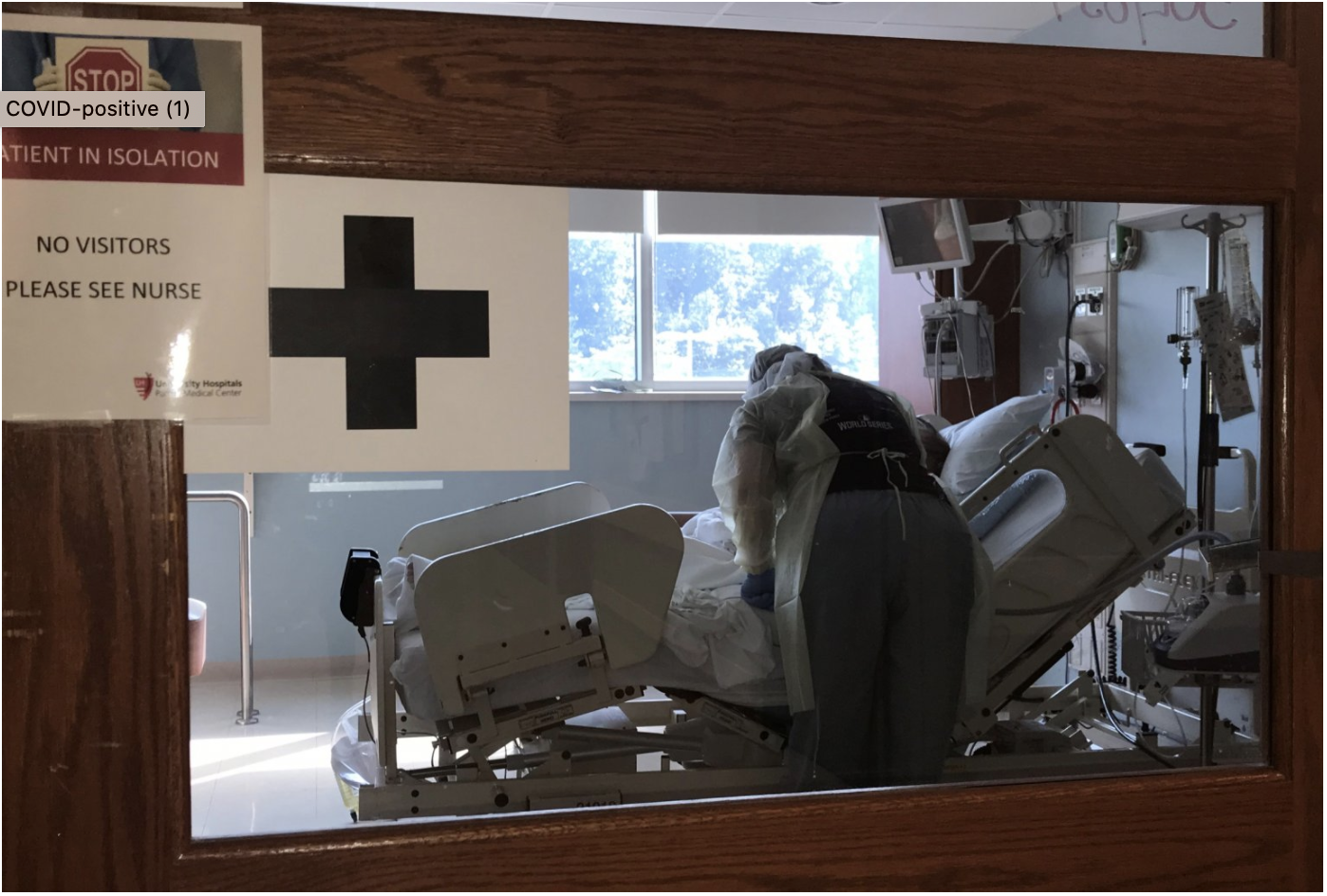
Medical staff tend to a COVID-19 patient. Courtesy of University Hospitals


By Susan Tebben
 

A state program to help those who can’t afford to bury their loved ones might see more action than usual and cause the need for re-education for townships that have to pay for these burials.

The Indigent Burial and Cremation program works with townships and municipalities to reimburse some of the costs of funeral disposition. When a resident is found to fall below the federal poverty line, Ohio law requires that a local government pay for the burial or cremation.

But local government officials have said the program wasn’t used often in its last version, nearly two decades ago.

More recently, however, several townships have called the state’s Board of Embalmers and Funeral Directors to get information about the program, and there are currently 450 applications being processed, according to Cheryl Grossman, the board’s executive director.

“We look for that number to grow dramatically,” Grossman said.

While a death certificate isn’t required with the application for funding reimbursement, Grossman and others have said the ongoing opioid epidemic and the COVID-19 pandemic could cause the program to have increased use.

“The opioid crisis is not going away and in some places it’s only being exacerbated by the COVID-19 crisis,” said Heidi Fought, executive director of the Ohio Township Association.

The program was a part of the budget more than a decade ago, but budget cuts led to the elimination of it until the last budget bill, passed in July of 2019.

The new budget line item moved the program from the state Department of Job and Family Services to the Board of Embalmers and Funeral Directors and allowed the reimbursement of a total of $2 million.

Under the new version of the program, a township can get reimbursed for up to $1,000 in burial or cremation expenses for an adult, and up to $750 for a child. Those numbers are a slight increase from the previous program, where reimbursements were set at $750 for an adult and $500 for a child.

The Board of Embalmers and Funeral Directors seems to be the only state agency with information on the program. Representatives from the Ohio Department of Job and Family Services, the Department of Health, the Office of Budget and Management and the Auditor of State all referred questions about the use and payment of the program to the board.

“While the local governments in the Southeast Region receive some funding, it is usually sporadic and nominal,” said Denise A. Blair, assistant chief auditor in the Southeast Region for the Auditor of State. “It would not rise to the level of materiality that would be included in our scope.”

The OTA specifically lobbied to bring back the funding for the indigent burial program in the last budget, despite the rarity of a cut program returning to the state budget.

“The fact that it did come back does show that the need is there,” Fought said.

The need to re-educate townships on the existence of the program and how to be reimbursed for it is also there, because of the turnover over of local officials in the period between the program’s existence, according to Fought.

Only local government representatives can apply for the reimbursement, so individuals have to go through those government officials to get help with their funeral disposition.

The Ohio Township Association says the push to increase the program’s funding will continue, especially considering local governments are required to pay for indigent burials whether or not there is money in the program’s coffers to reimburse them.

“A local government entity must carry out this duty even if funds are no longer available through the program,” according to the embalming and funeral directors board page on the program.

The program is needed as a state program because poverty does not focus on one particular county, nor does the need for burials or cremations.

“Indigency knows no boundaries,” said Fought. “They’re in central Ohio or Cleveland or Cincinnati, they’re everywhere.”

• • •• • •

… This story is provided by Ohio Capital Journal, a part of States Newsroom, a national 501 (c)(3) nonprofit. See the original story here.