Friday, December 04, 2020

Nate’s North Coast Notes • Cleveland Public Library presents lawyer/activist Bryan Stevenson | Holiday presentation at Karamu | Free Concert at Bop Stop | Crocker Park Holiday Lights

By Nathan E. Paige

Virtual Discussion with Lawyer/Author Bryan Stevenson – December 5 at Noon

Activist attorney Bryan Stevenson, who wrote the book-turned-movie “Just Mercy”, will speak at a Cleveland Public Library virtual program on Saturday, December 5.

As part of its Authors and Democracy literary series, the Cleveland Public Library presents Civil Rights Lawyer/Author Bryan Stevenson for an in-depth virtual discussion of his more than 30 years of fighting injustice and inequality Saturday, December 5 from noon – 1PM. Stevenson is the founder and Executive Director of the Equal Justice Initiative (EJI), a human rights organization in Montgomery, Alabama. Under his leadership, EJI has won major legal challenges eliminating excessive and unfair sentencing, exonerating innocent death row prisoners, confronting abuse of the incarcerated and the mentally ill, and aiding children prosecuted as adults.  He is a graduate of the Harvard Law School and the Harvard School of Government and the author of the award-winning New York Times bestseller, Just Mercy, which was made into a major motion picture starring Michael B. Jordan and Jamie Foxx.  Both actors went on to win NAACP Image Awards for their performances.  This is a free event; please register through Eventbrite.


Debbie Gifford Quartet Streaming Concert at BOP STOP – December 5 at 7:30 PM


The Debbie Gifford Quartet, consisting of vocalist Gifford; pianist Ed Ridley; bassist Aiden Plank and drummer Ricky Exton, will perform via livestream on the BOP STOP’s Facebook page Saturday, December 5 from 7:30-8:45 PM, providing an evening of jazzed-up holiday favorites.  In addition to being nominated for Vocalist of the Year, Jazz Musician of the Year and Jazz Band of the Year in the Annual Free Times Music Awards, Debbie Gifford is the only woman singer to ever perform with the Birdland Big Band. Accessing the stream is free, but donations will be appreciated.


The Crocker Park Holiday Light display can be viewed daily through January 1. A choreographed light show takes place nightly at 6PM through December 24.  (Photo by Nate Paige)

Crocker Park Holiday Lights – Through January 1

Now that Northeast Ohio has been blanketed in more snow in a 24-hour period than we really wanted, the festiveness of holiday lighting displays around town, including the Holiday Lights at Crocker Park, is that much more vibrant.  The choreographed light show, set to some of your favorite Christmas songs, kicks off nightly at 6 p.m. through Dec. 24.  The holiday lights will continue through January 1, 2021. Other highlights include the 13-foot Walk Through Ornament; Toy Train Town; a pop-up Holiday Market; and the Cleveland Monsters Real Ice Rink. Train rides on Santa’s Holiday Express are available in Santa’s Village from noon to 8 p.m. Monday through Saturday, noon to 6 p.m. Sundays and noon to 5 p.m. Dec 24. $4.


‘Joyful, A Karamu House Celebration’ (Available on YouTube December 10-January 10)


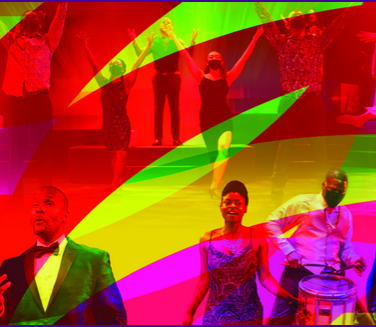
Karamu House presents the virtual holiday production, “Joyful, A Karamu House Celebration” on its YouTube channel Dec. 10-Jan. 10.
On the heels of its virtual Juneteenth series, Karamu gets into the spirit of the season with ”Joyful, A Karamu House Celebration,” featuring an evening of song and dance, representing cultures from around the world.  The cast includes Darelle Hill, Elizabeth Edwards, Jacob Hill, Lexy Lattimore, Joshua McElroy and Mary Frances R. Miller, and many others. This hour-long production can be viewed on Karamu’s YouTube page beginning December 10.  The purchase of a ticket, $24.99, allows the viewer 48 hours to watch the production. 

Is there an upcoming event you’d like included in this column? Please send the details, along with a high-resolution photo/graphic, to northcoastnotes@therealdealpress.com at least two weeks prior to the event.

• • •• • •


Thursday, December 03, 2020

CPT • Change is Coming to Ohio's iconic 11th Congressional District — Part I

Cuyahoga Politics Today

The 11th Congressional District as we know it is about to change, and with it, black Cleveland has a chance to remake itself — Part I

By R. T. Andrews

The very public effort of US Representative Marcia Fudge to persuade President-elect Joe Biden to appoint her as Secretary of Agriculture is an unmistakable signal that her time in Congress is rapidly coming to a close. Whether or not she secures the Cabinet slot, gets another appointment as consolation prize, or decamps to the nonprofit world, Greater Cleveland will soon have a new Congressional representative. And should some surprising turn of events occur whereby Fudge completes the term to which she was just elected, there is likely zero chance she would run again in 2022, when a new district, redrawn following this year’s Census, will almost certainly be less conducive to the walkover races she’s enjoyed since she won two races to succeed Stephanie Tubbs Jones in 2008.

Why Fudge has one foot out the door and the other in the air is open to speculation;  reluctance to face voters in a new district, and/or a loss of enthusiasm for the job are among those that have been advanced. Frankly, the reasons are subordinate in importance to a host of more substantial questions.

The Stokes brothers, Louis [standing]
and Carl, were architects of what we know
today as the 11th Congressional District.

What is the future of the 11th Congressional District?  How might we shake free of our dependence on the dinosaur style of politics that serves to keep us among the poorest, least healthy, and most ineffective communities in the nation? What opportunities exist for the black community to redefine our current politics? How can we develop and nurture the political talent that can make our politics relevant again? What changes need to be made to create a political climate where our electorate becomes engaged and our turnout is no longer dismal? Where among us at present are the candidates who can effectively represent our interests? How might we support them so that they remain responsive to us and not to the puppet masters who govern the larger community?

Answering these questions would go a long way to making the selection of Fudge’s successor a transformational moment and not just another horse race that reinforces the status quo.

Before we address these questions, let us first take a look back to another transformational moment.

• • •

What we now know as the 11th Congressional District was shaped as a result of multiple lawsuits filed in the 1960s over gerrymandering by the Ohio legislature to prevent the election of a black Congressman by carving up the black community. As Louis Stokes detailed in his memoir, that person most likely would have been his brother, Carl B. Stokes. But, as luck would have it, by the time the litigation was ultimately resolved, shortly after the US Supreme Court ruling in Lucas v. Rhodes, handed down in December 1967, Carl had just made history by becoming the first black elected mayor of a major American city.

[I pause here to give a special shout out to two black attorneys who were stalwart fighters in Cleveland’s civil rights struggles of the 1950s and 1960s: Russell T. Adrine and Richard L. Gunn, who shared legal offices but had separate practices, were part of the successful legal team that created what was originally the Twenty-First Congressional District.]

The chance to become Ohio’s first black Congressman drew a plethora of candidates, including several experienced and well-known politicians: George Forbes, who would become the longest-serving and most powerful city council president in Cleveland’s history; Leo Jackson, an outspoken maverick Glenville area councilman who would go on to a long and distinguished career on the Court of Appeals; and George White, the Lee-Harvard councilman who later became Chief Judge of the US District Court for the Northern District of Ohio.

What opportunities exist for the black community to redefine our current politics?

But Carl Stokes, who had been a driving force behind much of the litigation, was reluctant to concede the seat he felt was his to anyone outside his circle. And thus began the political career of his brother Louis, who would easily win the primary, winning every ward and every precinct, and go on defeat Republican Charles P. Lucas, who had been the plaintiff in the lawsuit that created the seat, in the general election.

Having a black Congressperson in Cleveland has been a given ever since 1968, when Louis Stokes won a special election for the Twenty-First Congressional District and became Ohio’s first black member of Congress. He went on to serve the entire district with distinction for thirty years, winning respect far and wide, perhaps as much for the dignity of his service as for his signal accomplishments and the bounty he returned to the district.

Stokes became the dean of local black politics in Greater Cleveland. While George Forbes, Arnold Pinkney, and later Mike White exercised tremendous political power and influence during the Stokes era, all understood that Lou was the godfather, the umpire and final arbiter on any important matters of political dispute within the black community. Much of his influence was exercised through BEDCO, the Black Elected Officials of Cleveland, the organization Stokes used to maintain a basic level of accountability, order, and coherence among local black elected officials.

The history of the 11th Congressional District has helped make the office of U. S. Representative the holy grail of Cleveland black politics.

As Stokes approached retirement, he proposed county prosecutor Stephanie Tubbs Jones as his successor. Her natural political touch, high name recognition, and immense popularity, along with an already distinguished resume that included service as a Common Pleas Court judge, made her the consensus pick. She won the 1998 primary in a landslide and seemed on her way to becoming a force in Congress when she suffered an aneurysm and died suddenly in July 2008.

The Cleveland black political establishment that had achieved some modicum of black political power, was now aged, and had failed to nurture any first-rate talent or establish any mechanism to pass the baton to the next generation. But in the absence of any countervailing force, they assembled enough energy to push forward a Tubbs Jones ally, then-Warrensville Hts. mayor Marcia Fudge, as her successor.

Unlike the pattern that prevails in districts with white representatives, the job expectation for Cleveland’s black Congressperson has always included more than normal constitutional duties. The history of the seat, coupled with systemic limitations upon the aspirations of black politicians — except for judges, only rarely has a black candidate (Virgil E. Brown Jr., Peter Lawson Jones, and Tubbs Jones) been able to succeed on a countywide ballot, and only one black nonjudicial candidate (Republican Ken Blackwell*) has ever won statewide — and the standard set by Lou Stokes, has made it the holy grail of local black politics.

While an evaluation of Fudge’s tenure in the seat is best left for another day, there is no doubt that the timing and manner of her departure will soon reveal just how bare is the cupboard of black political leadership in Cleveland.

Our next column will take a look at what her departure may mean for the constituents she leaves behind.

• • •• • •

* Blackwell was elected Ohio Treasurer in 1994 and Secretary of State in 1998 and 2002. Our original post said no black nonjudicial candidate had ever won a statewide election. This is true of Democrats who have run statewide.

Additionally, Jennette Bradley was elected Lieutenant Governor in 2002 as Governor Robert Taft's running mate. Taft appointed her as Ohio Treasurer, effective January 2005, to fill a vacancy; however she was defeated in the Republican primary the following year.

Both Blackwell and Bradley are African American.

Friday, November 27, 2020

Nate’s North Coast Notes • Winterfest | Cleveland Cinematheque | Sony’s Alpha Female Plus Grant Program

By Nathan E. Paige


Winterfest 2020 – (November 28 – January 3)

Winterfest 2020 – downtown Cleveland’s official kickoff to the holiday season – begins Saturday, November 28 at 7PM. (Photo: Nate Paige)


Winterfest is one of Cleveland’s most anticipated annual winter holiday events. Unfortunately, due to the COVID-19 pandemic, this year’s event has been scaled back, but still designed to entertain with a special tree lighting broadcast on WKYC-TV3 November 28 at 7PM. The wide variety of scheduled events includes daily light shows, performances by the Singing Angels, a Santas of the World Scavenger Hunt, the Rivergate Park/Merwin’s Wharf Riverfest, on-site and online shopping from downtown merchants and much more!   Get more information.


Take a break from your daily stresses with some frivolous entertainment by watching the low-budget, explosion-heavy film “Action U.S.A.” (Photo: Kino Marquee)


Cleveland Cinematheque Virtual Cinema: “Action U.S.A.” (Streaming through December 3)

Considering 2020 has been quite an exhausting and emotionally draining year, it can’t hurt to want to spend an hour or two on mindless escapism.  That’s where “Action U.S.A.” comes in.  Serving as the directorial debut of veteran Hollywood stuntman John Stewart, this 1989 film was shot in Texas, and the paper-thin plot revolves around missing stolen jewels.  Get ready for a series of car jumping scenes, huge explosions for the sake of explosions, and a hitman who resembles a muscular Freddie Mercury. The sub-par acting would make this film perfect fare for “Mystery Science Theater 3000.” Streaming fee is $10 and allows film to be viewed for five days. View the trailer.


Get an inside look at the inner workings of the Rock Hall during “Rock Your Giving Week” December 1-5. (Photo: Nate Paige)


Rock Your Giving Week at Rock and Roll Hall of Fame (December 1-5)

Tuesday, December 1 through Saturday, December 5, The Rock and Roll Hall of Fame presents “Rock Your Giving Week,” a series of free virtual, educational programs highlighting the Museum’s mission.  The schedule is as follows:

  • December 1: Backstage Pass - Learn about current preservation projects
  • December 2: Drum Like A Rock Star – Drumming tutorial
  • December 3: Preserve Your Rock Star Legacy – Explore the Rock Hall’s Library & Archives
  • December 4: Power of Rock & Roll - Learn about the free online educational resource Rock Hall EDU
  • December 5: Rock & Yoga - Join in an all-levels vinyasa session featuring instructors from Inner Bliss Yoga Studio

Programs begin at noon each day and are available on the Rock Hall’s YouTube page, Free, but donations welcome.  Get more information.


Sony is looking for female photographers and videographers to apply to its Alpha Female Grant Program. (Photo: Sony/YouTube)


Sony’s Alpha Female Plus Grant Program 

(Deadline February 15, 2021)

Sony is looking for female photographers and videographers to apply to its Alpha Female Grant Program. Among the items the winner will receive is a $5,000 grant to fund a specific, well-defined project; a full-frame Sony camera and lens (value of $3,000+) to shoot your project; and a one-year full Adobe Creative Cloud All Apps subscription to edit your project. The contest is open to all legal residents of the United States and Canada (with the exception of the Province of Quebec) who are at least 18 years old at the time of entry. The deadline to apply is February 15, 2021. Click here for compete details.


Is there an upcoming event you’d like included in this column? Send the details, along with a high-resolution photo/graphic, to northcoastnotes@therealdealpress.com at least two weeks prior to the event.

• • •• • •


Wednesday, November 25, 2020

Black nonprofits and service organizations find creative ways to survive Covid-19

By Rhonda Crowder


Even in the best of times, black nonprofit and service organizations face a unique set of challenges from secure funding to attracting new members. Add Covid-19 to the mix and the work becomes more daunting. 

We looked at three such area organizations — the United Black Fund, The Pan-Hellenic Council of Greater Cleveland and The National Council of Negro Women-Cuyahoga Section — to gain a sense of how such organizations, which play a vital community role, are coping in this pandemic.


United Black Fund

“Since March, we’ve been trying to remain fluid,” said Cecil Lipscomb, executive director of United Black Fund (UBF). Lipscomb said they are taking a conservative approach to how they manage and operate. Almost immediately, they took to working remotely and embracing a virtual meeting regimen. 

“At each turn, each day could be devastating news or great news. At the end of each day, things can change,” he said.

United Black Fund, the only Black federated human service organization in the state of Ohio, assists over 80 organizations annually and has distributed more than $12 million in grants. 


Cecil Lipscomb,
UBF executive director
According to Lipscomb, many of the organizations UBF serves were quiescent in the pandemic’s early days. They paused, he said, trying to figure it all out. But as conditions became more critical, it wasn’t long before UBF started getting urgent requests for support. Food shortages, children with depression and schools in need of technology were some of the most pressing issues. 

“UBF responded by providing means but by no way could we cover all the requests internally,” he said. “We were able to help through direct funds or partnerships with larger agencies.” 

For example, The Khnemu Foundation needed personal protection equipment to provide to it Glenville community. UBF helped them secure N95 masks from United Way and the Verizon Foundation. 

UBF also continued to work with the African American Association of Cultural Garden, providing direct consultation. 

“People are going to need outdoor spaces of healing. This can be a place we can gather,” said Lipscomb.

Additionally, UBF hosted a training in partnership with the Cleveland Leadership Center to train over 400 executives in Puerto Rico regarding fund development. Prior to the onset of the pandemic, the original plan had been to travel to Puerto Rico. However, the presenters were forced to pivot, converting the training materials to Spanish, using interpreters and FEMA representatives to deliver the service, and providing the training online.

And, in partnership with Mad Works, UBF supported the expansion of both enrollment and curriculum to enrich a summer program they previously sponsored in Richmond Heights Local Schools, teaching coding and graphic design over the summer to 75 children.

In addition to accelerating its responses to grantees, UBF has also begun to reconsider some of its strategic imperatives. The pandemic disruption and the social unrest that followed the murder of George Floyd this summer by police in Minneapolis created a sense of urgency for UBF to build its capacity. Lipscomb acknowledged UBF had not been sufficiently aggressive in the past in terms of providing financial support, in response time, and in scaling the organization.

“Our reach could be more,” he said. “We started thinking about how we can do more, to run to the fire as opposed to away from it.”

UBF has begun hosting a series of workshops via Zoom, titled Summit Ujima, to encourage non-profit leaders to think about how to catalyze collective work and responsibility.   

They recently signed a Memorandum of Understanding (MOU) with Black Economic and Wellness Coalition, to better align for a concerted effort and organize in response to problems. 

“We want to identify solutions and be proactive,” said Lipscomb. “We want to do things like invest and support in unique ways, being more intentional.”

They also worked with the Cleveland Black Equity and Humanity Fund [CBEHF], a donor-advised fund housed at the Cleveland Foundation.

CBEHF is the direct outgrowth of the Soul of Philanthropy – CLE, a year-long local citizen-initiated effort that worked to illuminate and expand the history, definition, and role of philanthropy in the black community. The members of the Soul Of Philanthropy – CLE’s executive committee continue to serve as the leadership of now CBEHF.  

“We wanted to continue to uplift black philanthropy and create a fund that would attract resources to deal with issues of inequity and create advancement and growth in the black community,” said Lipscomb. “Economics is going to be extremely important going forward.”

Surprisingly, Lipscomb continued, UBF saw an increase in funding, in particular from non-traditional, community folk such as Tim and Latrice Tramble as well as Michelle S. Felder and members of the Black Women Work CLE Facebook Group. 

UBF’s staff does much of its work remotely these days. Lipscomb said his days have started earlier and end later than before. UBF staff members have grown closer, as some have lost family members to Covid-19. The staff is reading together, as well. Begin Again, by Dr. Eddie Glaude, is their current text. 

Lipscomb shared with The Real Deal Press that this year’s annual UBF meeting, to be held next month, will have some unique aspects, inspired in part by the societal changes induced by the pandemic.  “It will be dynamic, with lots of design”, he said.


National Pan-Hellenic Council of Greater Cleveland

The National Pan-Hellenic Council is a collaborative umbrella organization comprising nine historically Black Greek-lettered fraternities and sororities.

The organizations — Alpha Phi Alpha, Alpha Kappa Alpha, Kappa Alpha Psi, Omega Psi Phi, Delta Sigma Theta, Phi Beta Sigma, Zeta Phi Beta, Sigma Gamma Rho, and Iota Phi Theta — are oftentimes collectively referred to as the "Divine Nine”.

The twelve local member chapters of these organizations each has their own community initiatives  in addition to working together.

L-R) Essence Bates (FinancialSecretary), Vikki Pruitte-Sorrells (1st Vice-president), Mark Sorrells (President),
Brian Webster (2nd Vice-president), and  Ashley Thomas (Correspondence Secretary)

Kappa Alpha Psi member Mark R. Sorrells became president of the National Pan-Hellenic Council of Greater Cleveland in January after serving the four previous years as 2nd Vice President. He said the “Cleveland Pan-Hell” and the local Divine Nine organizations are adapting to the climate.

“There have been a lot of changes,” said Sorrells. “We [Cleveland Pan-Hell] knew right away that at least our meetings would be different.”

Sorrells said The Cleveland Pan-Hell immediately started to meet via Zoom. “We thought it was going to be short. We were in denial. We still planned to do our social events,” he said.

They had scheduled a bowling party and a reunion picnic for the Spring, both of which had to be cancelled. However, the pandemic has not impacted their bottom line. 

“It didn’t hurt us financially,” he said. “We’re not shelling out money for expenses. Our expenses actually decreased.”

According to Sorrells, a lot of the Greek organizations hosted virtual regional conferences, including both Delta Sigma Theta and Alpha Kappa Alpha sororities. The AKA regional had been scheduled for Cleveland.  

“Covid made us rethink things,” said Sorrells, explaining how Cleveland Pan-Hell began to do more social action-oriented events. 


“We thought it was going to be short. We were in denial. We still planned to do our social events,” Sorrells said.


They held a virtual Day of Prayer, where all members of The Divine Nine were invited to  come together to pray about different things. They also held a Census 2020 event at Fatima Family Center and conducted Covid-19 testing.

“We’re still doing things,” Sorrells said. “We’re planning another Day of Prayer.”

Sorrells said that each of the Greek organizations had its own voting initiatives for this year'. “I don’t know what group didn’t have one.”

The Cleveland Pan-Hell usually hosts a Christmas Party at the Alpha Estates. This year, they’ll simply distribute meals and baskets. “We’re active, but active in a different way.”

They have an “adopted highway” program, supports the local HBCU College Fair, MLK Day speeches for youth as well. They’ve also hosted fun activities such as Black Jeopardy, something Sorrells is looking to revamp virtually.

Overall, The Pan-Hellenic Council of Greater Cleveland is still adjusting. It will soon be in fundraising mode, in anticipation of its 50th anniversary celebration in 2022. 

One of the biggest hurdles of the pandemic for Greek organizations, Sorrells said, is getting new members. “Covid presents a challenge to bringing in new members into Divine Nine organizations.”

Sorrells believes society’s current climate highlights the need for more collective action. “We need to come together and learn to put things in place to meet the needs of our community.”


National Council of Negro Women - Cuyahoga Section

The National Council of Negro Women is a non-profit organization founded in 1935 by the legendary Mary McCloud Bethune, with the mission to advance the opportunities and the quality of life for African American women, their families, and communities. 

Kemberlee H. Jones became president of NCNW’s Cuyahoga Section almost three months ago, in the midst of the pandemic. She says six prior years of service as an officer of the organization made it a smooth transition. 

The NCNW Cuyahoga Section, which has about 100 members, is fifty-four years old. There is a Cleveland Section as well.

“It has been challenging yet creative,” said Jones of the work during this pandemic. Her Section started meeting on Zoom. The way they delivered services has changed as well.

Every Friday for the last thirty years, they fed the men at the City Mission. Unable to continue doing that under Covid-19, they mailed a check to the Food Bank. They also donated items to Laura’s Home, Frontline Services, and Bessie’s Place — all organizations they supported prior to the onset of the pandemic. 

Every June for the last twenty years, the chapter has held a resource/health fair at the Zelma George Recreation Center at Luke Easter Park on the city’s southeast side.

“I don’t think it will look the same, but we still want to do something,” said Jones. 

Since the onset of the pandemic, they have hosted a town hall to encourage Census2020 participation on Facebook. 

“Our work is still going on, just in a virtual environment,” said Jones. “The work can’t stop. Our members are adjusting. We’ve done quite a bit. I'm very proud.”

Citing the increase in reported child abuse and domestic violence is up, one thing another this she wanted to do was revitalize the chapter’s child abuse and domestic violence committee. 

“That’s an area we need to be strong in,” said Jones. 

Jones  said her Section has a good relationship with other local sections and affiliates such as the Greek organizations, in terms of staying engaged and providing support.

She wants people to know their mission is to lead, advocate for, and empower African American women, their families and communities through research, advocacy and national and community based services and programs on issues of health, education and economics empowerment in the United States and in Africa. They are welcoming new members.

“I think all professional women should be a member of National Council of Negro Women,” she said.  

• • •• • •


Friday, November 20, 2020

Nate’s North Coast Notes • Cleveland Restaurant Week To Go | The Fresh Prince of Bel-Air | Wild Winter Lights at the Zoo | Glenville Record & Book Fair | C J Wallace interview

By Nathan E. Paige


Cleveland Restaurant Week To Go 2020 – Final Day November 20

The times they are a changin’, and in order to meet new guidelines resulting from the COVID-19 pandemic, this year’s Cleveland Restaurant Week offers culinary delights to go.  Choose from special menus from 41 local eateries offering dinner for two, dinner for four, or dinner with cocktails.  This year’s event will not offer prix-fixe selections.  Select restaurants are offering dine-in deals.


A special program reuniting the “The Fresh Prince of Bel-Air” cast for its 30th anniversary is currently streaming on HBO Max. 


“The Fresh Prince of Bel-Air” Reunion – HBO MAX

It’s been 30 years since America was introduced to another memorable NBC family, The Banks – along with transplanted West Philadelphia cousin, Will Smith.  An HBO Max special brings together the majority of the cast of “The Fresh Prince of Bel-Air”  —  Will Smith, Alfonso Ribeiro, Tatyana Ali, Karyn Parsons, Daphne Reid, Joseph Marcell and Jazzy Jeff — AND the original Aunt Viv (Janet Hubert)  for an emotional reunion. James Avery (Phil Banks) died in 2013.  The sitcom ran for six seasons from 1990-1996.  Watch the trailer.


       Get into the holiday spirit at Cleveland Metroparks Zoo with “Wild Winter Lights” lighting displays.


Wild Winter Lights at Cleveland Metroparks Zoo (Through December 30, 2020)

Nothing says the holiday season like larger-than-life light displays and the Cleveland Metroparks Zoo continues their tradition with Wild Winter Lights, presented by NOPEC. This year’s exhibit consists of more than 1 million lights and features themed displays including The Enchanted Forest, Candy Land and performances by The Singing Angels. The display can be experienced on foot or as a drive-through.  Pedestrians will be required to wear masks, and social distancing protocol will be enforced. Wild Winter Lights is currently open Thursdays through Sundays from 5:30-9:30PM, but the schedule will be expanded to include Monday nights beginning November 30. Get more information.


Glenville Record & Book Fair – November 21 (POSTPONED)

The Glenville Record & Book Fair is a collaboration between ThirdSpace Action Lab, Twelve Literary Arts and Brittany’s Record Shop,  and will feature more than 500 books to browse, crates of vinyl from numerous genres, Cleveland-themed apparel,  meals available for purchase from Southern Sweets + CLE Biscuit Heads and more!  Due to the Stay-at-Home order issued by Governor Mike DeWine on November 19, this event has been postponed.  A rescheduled date will be announced.


Watch the archived interview of C.J. Wallace, son of
Christopher Wallace (The Notorious B.I.G.), who was
inducted into the Rock and Roll Hall of Fame this year.
 

Archive of Rock Hall Interview with C.J. Wallace 

As part of the 2020 Rock and Roll Hall of Fame Inductions celebration, a series of virtual interviews were conducted prior to the November 7 Induction Special on HBO.  One of those interviews was with actor/musician/business owner C.J. Wallace, son of 2020 Inductee Christopher George Latore Wallace (The Notorious B.I.G.).  During the interview, Wallace speaks intimately about his father and grandmother, and being an advocate for cannabis.  Watch the archive.


Is there an upcoming event you’d like included in this column? Please send the details, along with a high-resolution photo/graphic, to northcoastnotes@therealdealpress.com at least two weeks prior to the event.

• • •• • •


Monday, November 09, 2020

Black and Brown voters powered Biden-Harris ticket

FROM THE PULPIT TO PUBLIC SQUARE

By Marvin A. McMickle, Ph.D.


There are two things that must be pointed out as we look back on the 2020 presidential election. First, black and brown voters from all across the country were the driving force in the election of Joe Biden and Kamala Harris. It is clear that Jim Clyburn of South Carolina rescued Joe Biden’s campaign from potential obscurity after Biden lost primaries in Iowa, Nevada, and New Hampshire. Biden was considered to be “down and out.” Then came the South Carolina primary and Clyburn’s endorsement, and black voters (especially black women voters), set the Biden campaign on a path to the White House. That journey was greatly assisted by President Barack Obama who campaigned for Biden in crucial swing states like Pennsylvania, Michigan, and Georgia. Donald Trump won in 2016 largely because black and brown voters in those and other states did not come out in high enough numbers. That mistake was not repeated in 2020. There should be no doubt that black and brown voters made the difference in the election of Joe Biden and Kamala Harris. 

There is no doubt that two United States Senate seats are within reach in Georgia because of a black woman named Stacey Abrams. The election of Joe Biden will be frustrated by Mitch McConnell who is the Senate Majority Leader and the other Republican Senators who have stood in the way of progressive policies for the last ten years. Abrams has worked to register so many new voters in Georgia that those two Democratic Senate candidates are positioned to win. One of those candidates is my long-time friend Raphael Warnock who is the Senior Pastor of Ebenezer Baptist Church in Atlanta where Martin Luther King, Jr. had been co-pastor. 

One of the historic consequences of black and brown voter turnout is the election of Kamala Harris who will bring her African American and South Asian sensibilities to the table. It is clear that black and brown voters drove the Biden/Harris campaign to victory. A graduate of Howard University (an HBCU) and a member of Alpha Kappa Alpha) is now the Vice-President-elect of the United States. Fifty-five years after the adoption of the Voting Rights Act, the power of the black vote was flexed in a substantial way. As Jesse Jackson said in 1984, “hands that once picked cotton now pick Presidents.” 

It is regrettable that voter turnout was not equally large here in Cleveland and Cuyahoga County. There were precincts in Cleveland where voter turnout was around 30% of the eligible voters. Black political leaders in Cleveland and the Cuyahoga County Democratic Party must do better if Ohio is to remain relevant in national and statewide politics. 

I use the word relevant, because there is a second lesson that must be learned from last week’s election. Over 70 million people voted for Donald Trump. That is the second highest number of votes given to a presidential candidate in the history of the United States. Joe Biden beat Trump by more than four million votes. Are we really the UNITED States of America? It seems as if the voting patterns of many white Americans were the exact opposite of black and brown voters. In Ohio, Trump won 81 of the 88 counties, including nearby Lake and Mahoning. The same was true in Michigan, Wisconsin, Pennsylvania, and even in New York State. Needless to say, that pattern was repeated in states across the country from Missouri to Mississippi and from Texas to Tennessee. Nearly one-half of the population of this country is not rejoicing over the results of this election cycle. Many of them still believe that Donald Trump actually won the election and is being denied that victory due to voter fraud. 

It will take a long time and a lot of work and prayer if this nation is ever to be UNITED again. 

• • •• • •

The Rev. Marvin A. McMickle, pastor emeritus of Antioch Baptist Church in Cleveland, retired last year as president of Colgate Rochester Crozer Divinity School in Rochester, New York, where he had served since 2011.


Sunday, November 08, 2020

The Struggle Continues

From an online article in The Smithsonian magazine

By R. T. Andrews

‘Lord, we ain’t what we oughta be. We ain’t what we want to be. We ain’t what we gonna be. But thank God, we ain’t what we was.’

That sentiment, expressed by Martin Luther King at an Emancipation centennial event in 1962, can be felt across much of the land this morning.

You could sense the nation’s collective sigh of relief last night as the country began the ceremonial transition, from its Tasmanian devil of a president and his wooden sidekick of a veep, to the reassuring presence of an Uncle Joe, accompanied by his potential rock star of a governing partner, Kamala Harris.

‘Lord, we ain’t what we oughta be. We ain’t what we want to be. We ain’t what we gonna be. But thank God, we ain’t what we was.’

The United States in 1862 was a nation literally at war with itself. Rebels were fighting to preserve a way of life that other parts of the country wanted to leave behind: chattel slavery, religious bigotry, nativism, xenophobia.

For the past four years it seems as if those alternative visions of the world were still being contested. Make America Great Again was a very thin code for a nostalgic call to a past where black people were underfoot, women were in the kitchen, gays were in the closet, and white men were ascendant, under precious few obligations of restraint. Police busted heads on the regular without fear of reprisal, women were silent over all manner of violation, shaming and disbelief being normal consequences for truth telling. Anything outside of an able bodied heterosexual white man was deviant and ‘less than’ by definition.

The irresistible forces of diversity — which is to say, the natural conditions of humankind — have been taking it on the chin and in the solar plexus these last four years. The assault has been played out relentlessly on the airwaves: governance by ego, rooted in confederate nostalgia and counterfeit reality, manipulated offstage as always by forces of unmitigated greed that produce historic wealth inequality.

While the trumpian coronavirus has been momentarily exorcised from the White House, its residence there did incalculable damage to the organs of America: our infrastructure of government, our politics, our society, and our culture.

To expect a Biden administration to restore the status quo that existed before trumpism entered the open sores of our society is fantasy. For the moment we can breathe more easily because the inflammation has receded, that incessant tweeting pain has subsided.

But COVID-19 is still here, wreaking havoc with our health and our economy. To defeat it will require and the immediate attention and intelligent aggression of the new administration, as well as patience by American citizens, who are already fatigued by mask-wearing, social distancing, Zoom meetings, and lost conveniences.

Patience has seldom been a virtue of our national character. While Trump fatigue may be in our rear view mirror, one early measure of the Biden administration will be its ability to forge sufficient consensus around mask-wearing and quarantines while an effective vaccine is developed and distributed.

That won’t be easy. The new president will have a thin margin in the House and implacable opposition in the Senate. Majority Leader Mitch McConnell may extend some good ol’ boy collegiality towards Biden, a former colleague, but he will continue to stand resolutely in the gap against anything remotely resembling progress.

Vice President-elect Kamala Harris superimposed upon the shadow of Norman Rockwell's
1964 illustration of six-year old Ruby Bridges as she was accompanied by US Marshals in the
desegregation of public schools in New Orleans.

Finally, a word on the new Vice President. It is of course far too early to tell, but her elevation to national leadership status may prove to be the most consequential harbinger of a new generation. Barack Obama cracked open a door in a notorious manner, ushering in a twenty-four second “post-racial” America that was immediately followed by in true American fashion by nativistic American backlash. But Kamala Harris, on the strength of black women, has eased into the sidecar seat, from which she is positioned both symbolically and realistically, to change the landscape irrevocably.

To put it another way, there was no guarantee that the Jackie Robinson experiment to integrate major league baseball would succeed. If Obama was Jackie, Kamala is Willie Mays and Roberto Clemente. There is no turning back.

• • •• • •